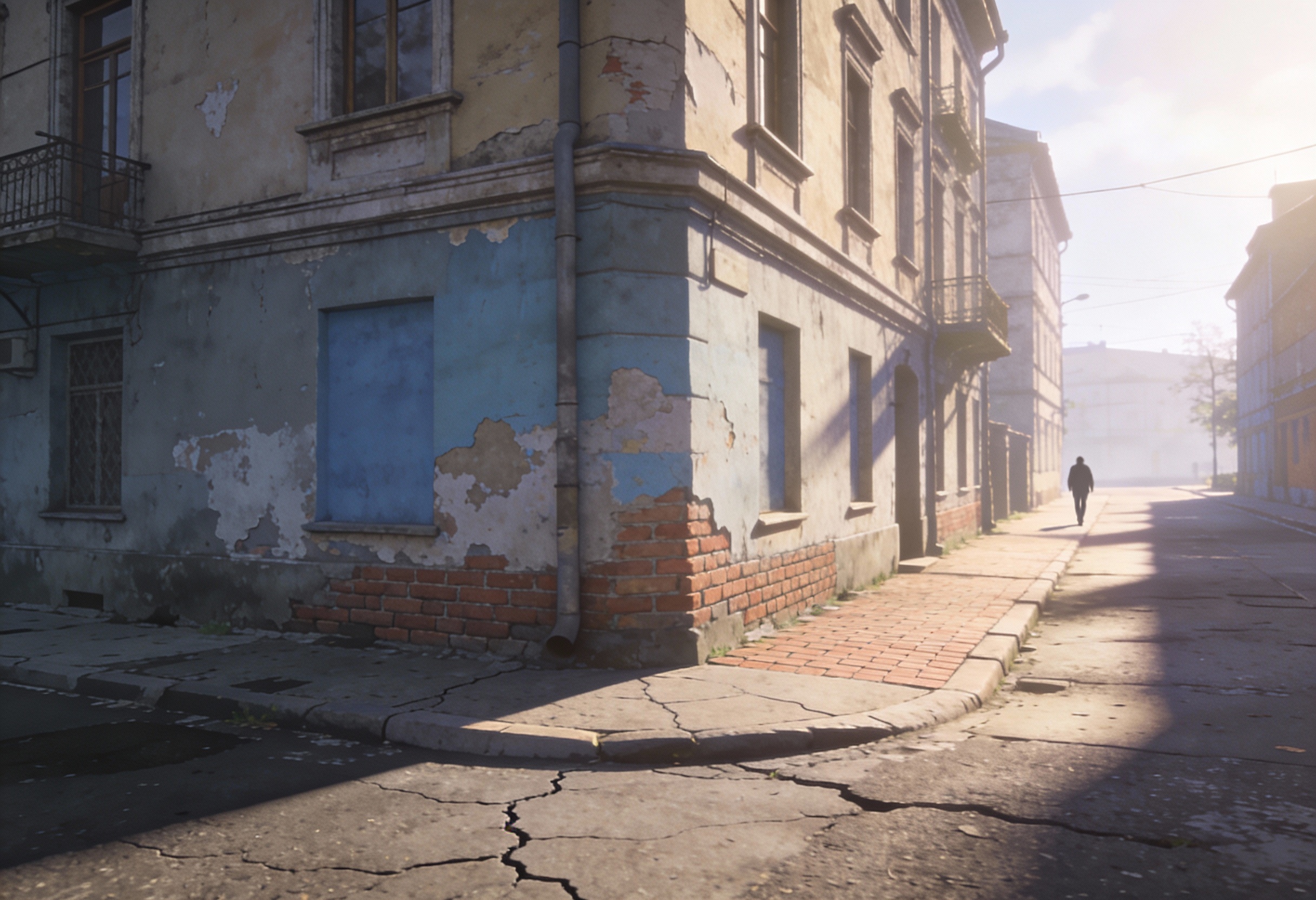
Most people walk past them without a second thought. Corners they’ve crossed a thousand times. Buildings with no signs, no stories attached, no reason to slow down. These places don’t advertise meaning. They don’t ask to be remembered. And yet, for anyone willing to pause, they often hold the richest returns.
In documentary perspective, the idea of a “jackpot” has nothing to do with spectacle. It isn’t sudden or explosive. It’s quiet. It’s cumulative. It arrives after enough time spent looking where others don’t. Ordinary places become extraordinary not because they change, but because attention does.
The Difference Between Familiar and Empty
Familiarity is often mistaken for emptiness. When a place becomes routine, the mind stops checking for detail. Visual shortcuts take over. We see outlines instead of texture. Movement instead of meaning.
Documentary work pushes back against this instinct. It treats the familiar as unfinished. A bus stop is no longer just a bus stop. It becomes a stage for repetition, waiting, impatience, and small gestures that repeat daily without recognition. A closed storefront stops being a failure and starts reading like a record of economic shifts, personal risk, and quiet resilience.
These places haven’t lost meaning. We’ve just stopped scanning for it.
Why the Best Stories Rarely Look Special
Extraordinary stories rarely look extraordinary at first glance. They don’t come framed or explained. They exist in patterns: who shows up, who disappears, what stays the same longer than expected.
Ordinary places are perfect containers for these patterns. They host routines. They collect residue. They allow time to stack instead of reset. Over years, this accumulation becomes dense with information. Cultural, social, emotional.
The jackpot isn’t hidden behind a door. It’s sitting in plain sight, waiting for enough patience to unlock it.
Attention Is the Real Investment
In documentary storytelling, attention functions like capital. Where you place it determines the return. Flashy locations offer quick rewards but little depth. Ordinary places ask for more time, but they give more back.
The longer you stay, the more details surface. The rhythm of foot traffic. The unspoken rules of a space. The way people navigate around the same obstacles day after day. These details don’t announce themselves. They require observation without urgency.
This is where the odds quietly shift. Not through chance, but through consistency.
How Repetition Creates Meaning
Repetition is often dismissed as boring, but in documentary terms, it’s where meaning stabilizes. When the same actions happen in the same place over time, patterns become visible.
A park bench occupied by different people at the same hour every day. A street corner that changes mood with the light. A hallway that echoes differently depending on who passes through. These repetitions act like slow spins of a reel. Each pass adds context. Each return deepens understanding.
The payoff doesn’t come all at once. It builds.
Ordinary Places as Cultural Archives
Cities rarely archive themselves intentionally. They do it through use. Ordinary places absorb cultural memory simply by existing long enough to be used repeatedly.
A staircase worn smooth at the center. A wall layered with years of informal notices. A shop interior that never quite updates its layout. These details are not preserved. They persist. And persistence is often more revealing than preservation.
Documentary perspective values this kind of archive because it’s uncurated. No one decided what mattered. Time did.
Why Stillness Outperforms Movement
In fast-moving media, novelty is rewarded. New locations, new angles, constant motion. Documentary work often finds more value in staying put.
When the camera doesn’t move, the place starts to speak. Changes that seemed insignificant become noticeable. A shift in sound. A change in light. A different kind of presence at the same hour.
Stillness increases sensitivity. It raises the odds of noticing what usually slips through.
The Quiet Pull of the Overlooked
Ordinary places don’t compete for attention, and that’s exactly why they work. There’s no pressure to react. No expectation to be impressed. The viewer is free to settle in.
This freedom creates a different kind of engagement. One based on recognition rather than surprise. You see your own routines reflected back. Your own overlooked spaces. The connection feels personal because it’s built from shared normality.
That’s the quiet pull. Not excitement, but resonance.
When the Payoff Is Subtle but Lasting
The jackpots found in ordinary places don’t feel dramatic. There’s no single moment of revelation. Instead, understanding accumulates until it feels obvious in hindsight.
You realize the place was never empty. You just hadn’t been listening long enough.
That kind of payoff lasts. It changes how you move through other spaces. How quickly you dismiss them. How often you slow down.
And once that shift happens, ordinary places stop looking ordinary at all.