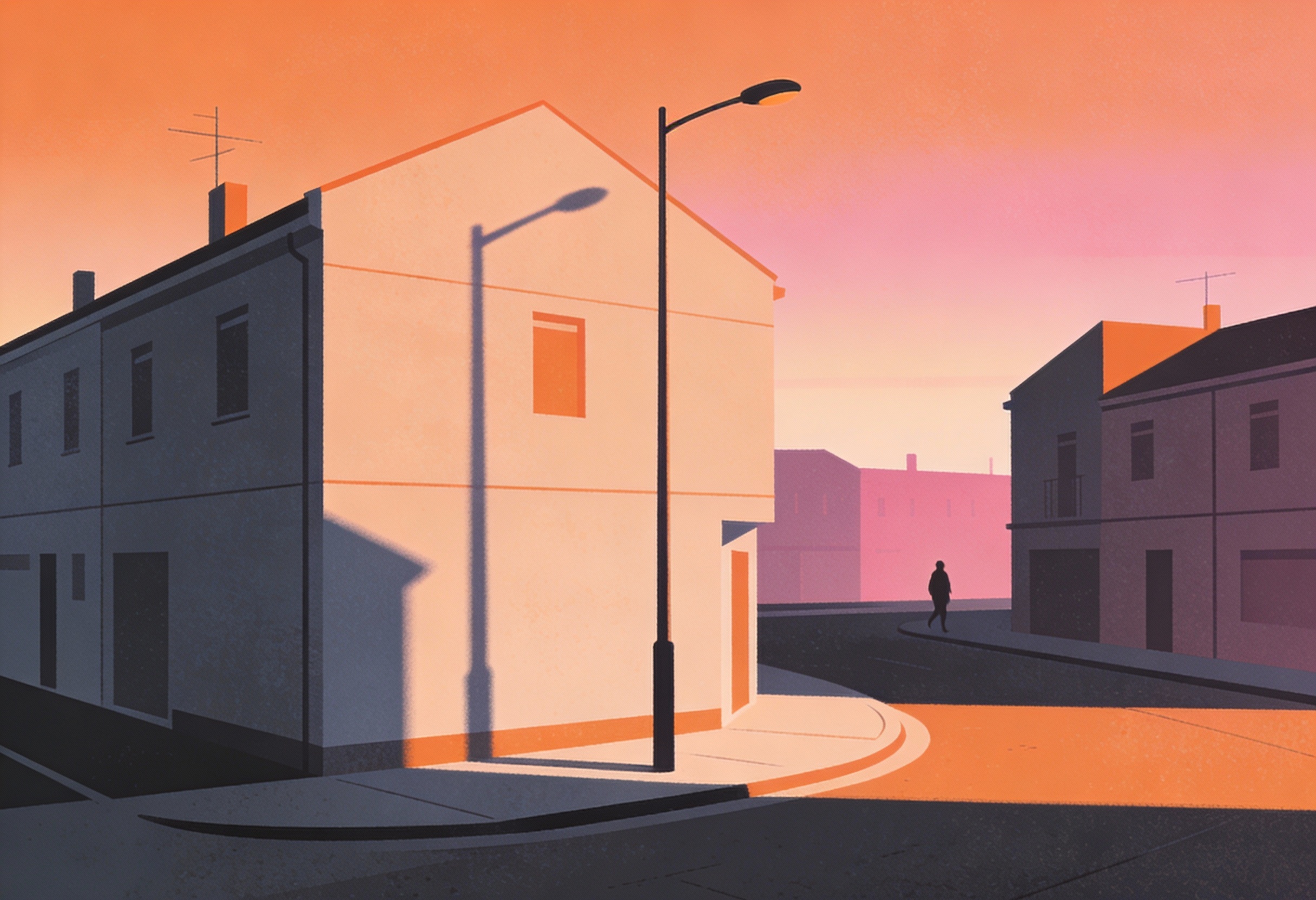
Most stories don’t announce themselves. They don’t arrive with dramatic framing or clear beginnings. They exist quietly, woven into ordinary places, waiting to be noticed. Streets we pass every day, buildings we stop seeing, routines that blur into background noise. The material is there, but attention rarely is.
Documentary storytelling often begins not with discovery, but with restraint. The decision to look again. To stay longer than necessary. To treat the familiar as unfinished. In that pause, the everyday starts to reveal its edges. Not secrets exactly, but layers.
What pulls us in is rarely spectacle. It’s recognition.
The Difference Between Seeing and Noticing
Seeing is automatic. Noticing is deliberate. Cameras capture what is visible, but stories emerge from what is observed. A quiet storefront that never changes its sign. A person who takes the same route at the same hour every day. A wall layered with years of faded posters, each one hinting at a moment already gone.
These details don’t compete for attention. They sit patiently, unchanged by whether anyone looks at them or not. Documentary perspective values this patience. It understands that meaning accumulates over time, not through interruption.
When attention slows down, the ordinary stops feeling flat. It gains texture.
Why Everyday Places Hold the Strongest Narratives
There is a reason documentary work often returns to streets, homes, and overlooked spaces. These places carry continuity. They witness repetition. They absorb human presence without comment.
A building doesn’t need a plaque to hold history. A sidewalk doesn’t need explanation to reflect use. The strongest narratives often live where nothing seems to be happening, because that is where life repeats itself without performance.
These spaces resist closure. They don’t resolve neatly. They remain open, allowing stories to surface gradually instead of delivering a single message.
The Role of Quiet in Documentary Storytelling
Silence is not absence in documentary work. It is structure. Quiet moments give context to what follows and weight to what came before. They allow the viewer to participate rather than consume.
Observational storytelling relies on this space. The camera waits. The sound lingers. Nothing is rushed into meaning. The result feels less like explanation and more like witnessing.
This approach trusts the audience. It assumes understanding will form without being forced.
When Stories Exist Without Being Told
Not every story wants narration. Some exist fully without commentary, carried by movement, habit, and environment. A light turning on in the same window every evening. A chair placed back in the same position each night. These repetitions speak through consistency.
Documentary perspective recognizes that not all meaning needs translation. Sometimes framing is enough. Sometimes duration is the message.
The pull comes from staying with what is already there.
Cultural Memory Lives in the Background
Culture is often discussed through trends and moments, but its deeper layers live in background behavior. The way people queue. The way they greet each other. The way spaces are used long after their original purpose has faded.
These behaviors rarely draw attention to themselves. They persist quietly, shaping identity without announcement. Documentary work that focuses on these patterns reveals culture as something lived, not declared.
What matters is not the event, but the repetition.
Why These Stories Feel Personal
Stories hidden in plain sight often feel personal because they mirror our own routines. We recognize ourselves in them. The unnoticed becomes familiar. The overlooked becomes intimate.
This connection doesn’t rely on empathy alone. It comes from shared experience. The understanding that meaning is not always dramatic, but cumulative.
Documentary storytelling makes room for this recognition by refusing to rush past it.
The Quiet Pull of Staying Present
The most powerful documentary moments often happen when nothing changes. The frame stays still. The sound continues. Time passes.
This stillness invites presence. It asks the viewer to stay instead of move on. To look again at what they might normally ignore.
In a world built around constant updates, this refusal to escalate becomes its own statement.
When Attention Becomes the Story
At its core, documentary perspective is not about finding new stories. It’s about changing how we pay attention to existing ones.
Some stories don’t need uncovering. They need space. Space to be seen without urgency. Space to exist without explanation.
They are hidden in plain sight not because they are obscure, but because we are often in a hurry.
And when we slow down long enough to notice them, the pull is quiet, but it stays.